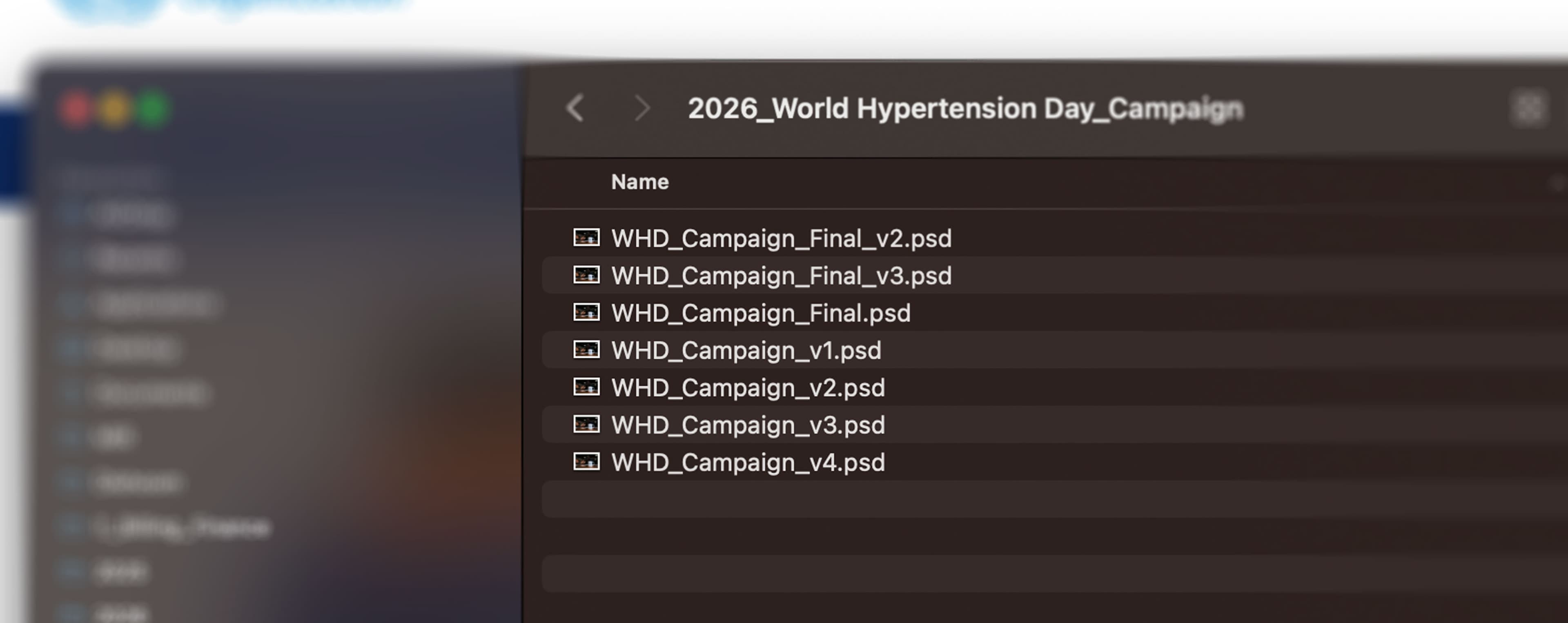
Why your last brief failed (And how to spot it before round 3)
It started strong. A clear vision. A stakeholder meeting where everyone nodded. A brief that felt solid.
Then design happened.
Two weeks in, feedback arrives. But it doesn't match what you briefed. One stakeholder says, "This isn't what I imagined." Another says, "I thought we decided..." The creative team is confused. You're defending a brief that apparently meant three different things.
Round 2. Same brief. Different interpretations.
This isn't a design problem. It's a brief problem. And by now, it's costing you.
The pattern nobody talks about
Bad briefs don't announce themselves. They feel fine in the room. They look fine on paper. But somewhere between "intent" and "execution," the message breaks.
Here's what happens next:
Interpretation gaps widen. Your designer reads the brief one way. Your stakeholder reads it another. Your copywriter reads it a third way. Everyone's building something different, and nobody knows it until they see the work.
Feedback becomes contradictory. Because people had different briefs in their heads, their feedback contradicts itself. One round of revisions fixes one person's issue and breaks another's.
Rounds multiply. Not because the work is bad. Because the brief wasn't protecting the direction. Each round buys you a little more clarity—at the cost of momentum, timeline, and team morale.
Creative restarts. By round 3, the team rebuilds concepts because intent shifted. The energy that should go into creation goes into fixing. Momentum dies.
Timeline slips. You thought launch was week 8. Now it's week 11. Not because execution was slow. Because alignment took longer than expected.
Quality suffers. Safe creative wins. Directional bravery loses. The team plays it conservative because the brief wasn't clear enough to protect bold choices.
Five signs your brief is about to cost you
Before the rounds start, there are signals. Watch for these:
1. The brief uses strategy language that isn't specific. "Increase awareness." "Drive engagement." "Feel inspired." These sound good in a meeting. In execution, they scatter. Everyone interprets them differently.
2. Success isn't measurable. "We'll know it's working when..." trails off. If you can't measure it, stakeholders will measure it however they want. And they'll all measure it differently.
3. Approval layers aren't clear upfront. You don't know who decides what. Or how many people need to agree. Or when they'll weigh in. This creates surprise feedback late in the process.
4. The "why" behind decisions isn't documented. "We chose this direction because..." isn't written down. Without the reasoning, future decisions will second-guess past ones.
5. Constraints aren't explicit. "Keep it professional" vs. "No humor, no lifestyle imagery, product-only focus." Vague constraints force teams to guess. Explicit ones protect them.
This repeats because it's predictable
The brief debt accumulates silently. Teams see it. They feel it. But nobody ties it back to the brief itself.
So the next brief follows the same pattern. And the next one. And the team learns to over-explain in feedback and under-commit in the brief, just to survive the rounds.
What you can do now
Before your next brief hits a team, audit the one you're about to send.
Does it define success specifically (not strategically)?
Does it clarify who approves what?
Does it explain the why behind direction?
Does it name hard constraints, not soft ones?
Would everyone read this the same way?
If you hesitated on any of those, the brief isn't ready.
Fixing it now costs an hour. Fixing it in round 3 costs a week.
The good news:
This isn't a design problem or a creative problem. It's a brief problem. And brief problems are solvable before work starts.
GudBrief helps you catch these gaps before design starts. Instead of discovering misalignment in feedback, you find it in the brief, when it's quick to fix.
Try 1 brief free at GudBrief.com and see where the real friction lives.